
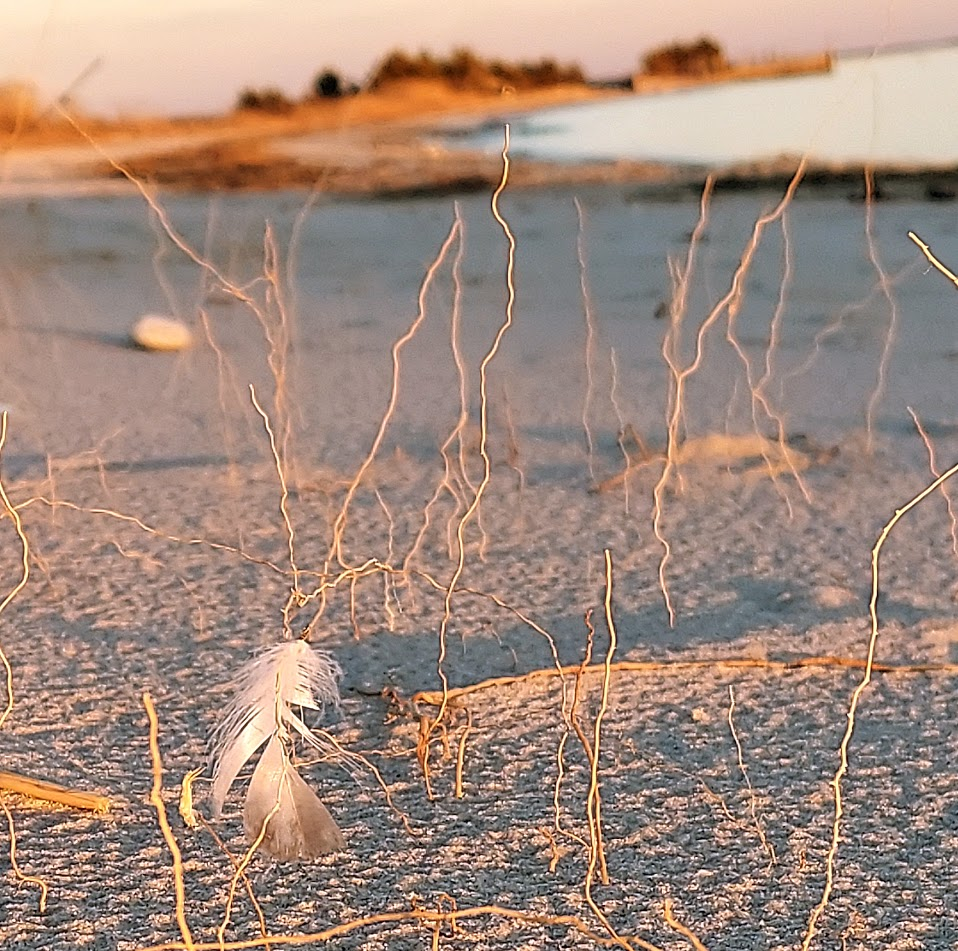
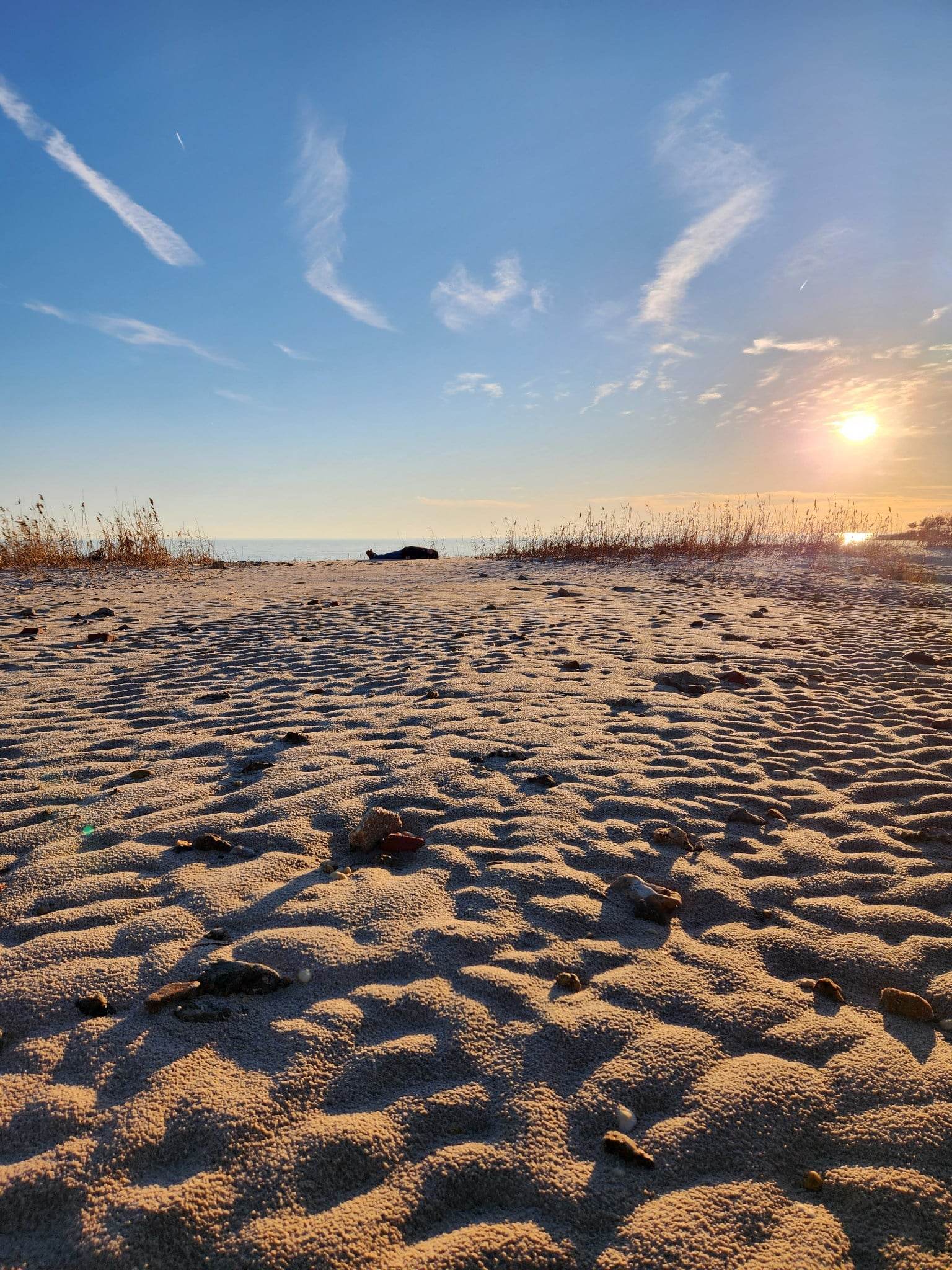
Yesterday I woke up with the words “hope is the thing with feathers” on my mind, the first line of the poem “Hope.” by Emily Dickinson. Later, while walking on the beach, I found a white feather fluttering on a weedy stem, which seemed quite auspicious considering my thoughts and it being the first day of the new year.
Today, since a hopeful feather was on my mind, it seemed appropriate to learn about Dickinson and her poem.
For many years, I have not had a good opinion of Emily Dickinson’s work. Apparently, I have confused her with Edna St. Vincent Millay, whom my mother loved. My mother tried to emulate Millay’s style in her own poetry writing- poetry that I found depressing and sometimes disturbing. Therefore, I made an uneducated decision that Millay’s, mistakenly Dickenson’s, word was also depressing and disturbing.
So, after searching on the internet, I have found out that Emily Elizabeth Dickinson (1830-1886) lived mostly in solitude. Her poetry reflected her fascination with nature, illness, dying and death, love, and religion. She wrote about 1800 poems, the vast majority of which were not published until after her death, and, she loved her garden. She believed in tangible places of the mind and spirit, what she called the “undiscovered continent,” and in which she spent much time. She created an album of 424 pressed specimens of plants, known as “Dickinson’s Herbarium” (currently held at Harvard University’s Houghton Library, along with her writing desk, personal library, and an enormous collection of her manuscripts). Dickinson is known for her unique writing techniques and is considered one of the most important of American poets.
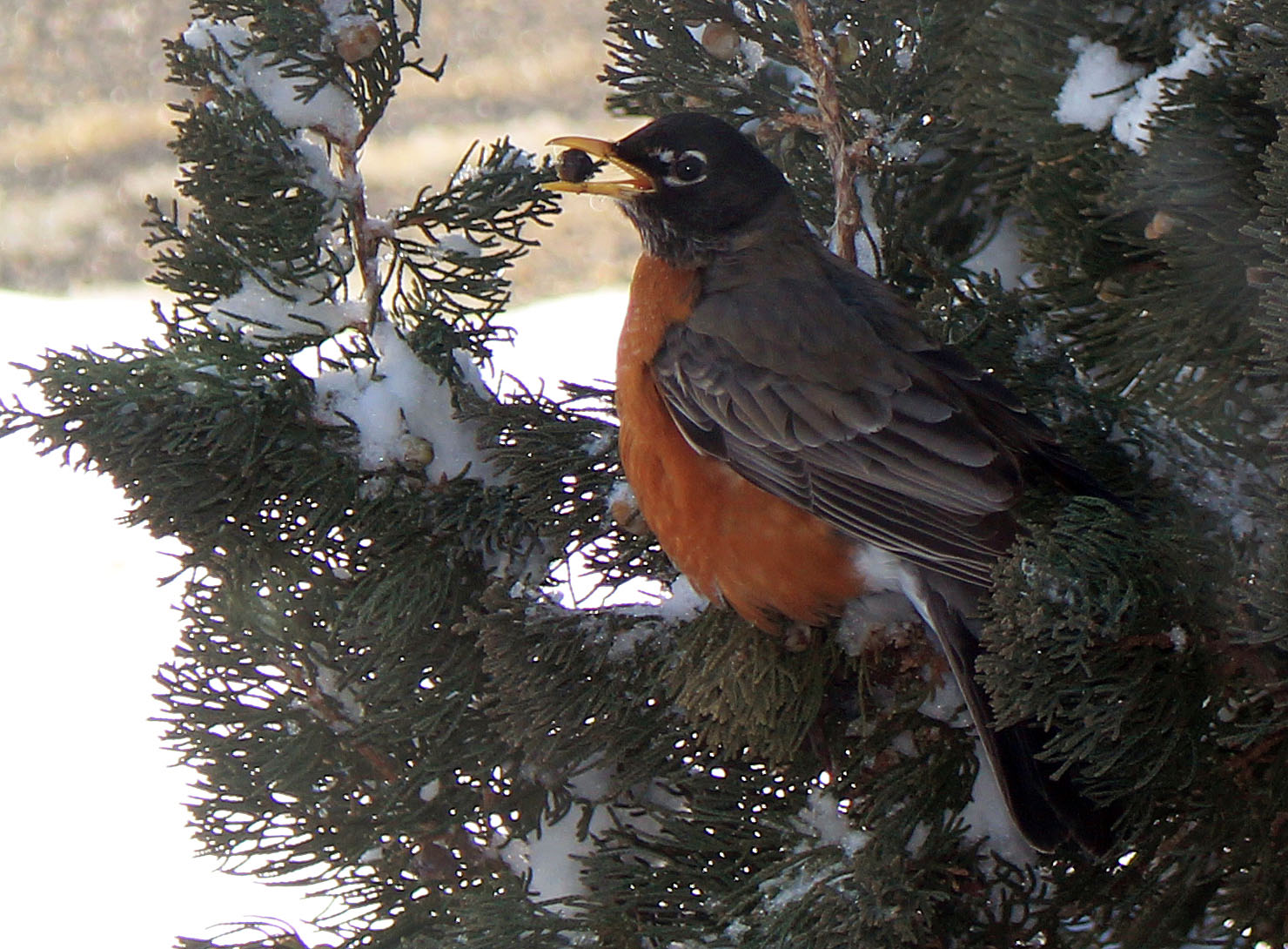
In Dickenson’s poem, a bird, the thing with feathers, represents hope.
Merriam-Webster defines hope: to cherish a desire with anticipation; to want something to happen or be true; a desire accompanied by expectation of or belief in fulfillment; trust.
Emily’s bird, perched deep in our heart and soul, quietly sings a sweet song, despite the difficulties and strangeness of life, and asks nothing of us, encouraging us. Hope is an enduring human capacity that pushes us to hold on and survive life’s trials.
Thank you, Emily Dickinson.
To those of you reading this on the second day of the new year, I hope the “thing with feathers” will warm your heart and sustain you through whatever harsh or disheartening times you may encounter.
~Elizabeth


https://commons.wikimedia.org/w/index.php?curid=105345778








 looking closer...